
Olmsted County Arrest Warrants Explained
An arrest warrant is judicial paperwork that allows peace officers to take someone into custody, and in Olmsted County it can grow out of a suspected crime or from breaking a court order, such as a missed appearance, a probation violation, or a pretrial violation. The Sheriff's Office says it plainly: it does not issue warrants. Olmsted County District Court issues every one, with a judge signing or approving the order. The Sheriff's Office lays out the difference between issuing a warrant and serving one.
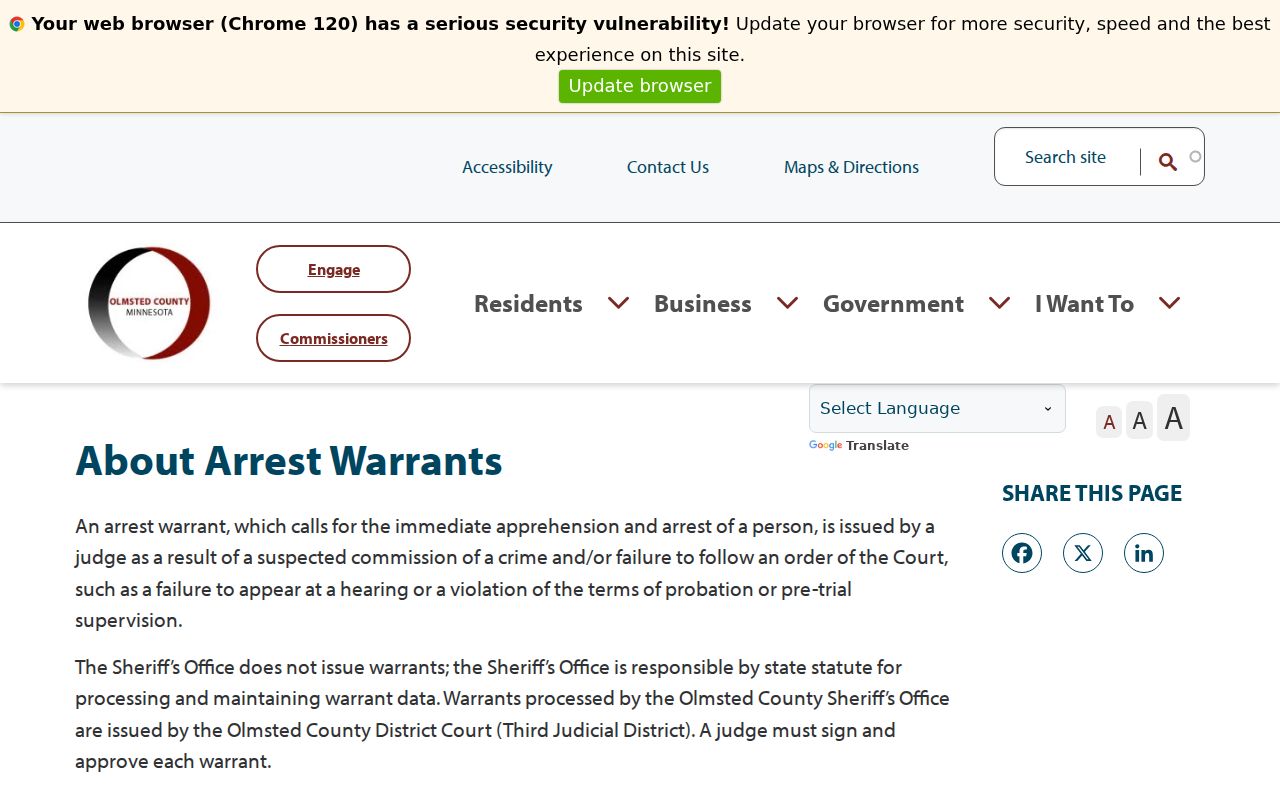
That split in duties is why one Olmsted County warrant question usually needs both a sheriff call and a court call.
Probable Cause Behind Olmsted Arrest Warrants
Probable cause is the legal gate every Olmsted County warrant passes through. Under Minnesota Rule 3, a complaint, its attachments, or sworn testimony has to establish probable cause before a summons or warrant issues, and the rule leans toward a summons in ordinary cases. Rule 4 handles probable-cause review after a warrantless arrest. That is a separate matter from how a warrant gets issued.
Inside an Olmsted County Arrest Warrant
An Olmsted County arrest warrant holds far more detail than the public list reveals. These are the fields a court or jail actually reads.
| Defendant Name | The person named in the order. |
|---|---|
| Charge and Offense Level | The offense and its classification under Minnesota law. |
| Issuing Court | Olmsted County District Court. |
| Judge | The judge who signed or approved the warrant. |
| Case or Warrant Number | The identifier the court and the jail use. |
| Conditions | Bail or bond terms, release conditions, or a sign-and-release instruction. |
| Status | active, served, recalled, or cleared, as the court records it. |
The county's public summary gives just a name, a date of birth, and a count. Everything beyond that comes from Court Administration or the jail.
Olmsted County Felony Warrant Counts
The Olmsted County Sheriff's Office tracks felony warrant activity year by year. The 2025 report shows 647 felony warrants in. It lists 534 cleared by arrest and 104 cleared another way, inside total warrant activity of 2,113 for the year.
Those Olmsted County numbers measure office workload. They count entries, not people, and say nothing about any single case.
Serving Arrest Warrants in Olmsted County
The Civil and Warrants Division serves criminal warrants and runs extraditions and fugitive investigations. Minnesota Statutes section 387.03 puts the duty to pursue and apprehend felons on the sheriff, which is the legal footing for that work in Olmsted County. Service can come at a home, a workplace, or a traffic stop. A person who knows about a warrant can end the waiting by surrendering instead.
Warrant flow: District Court issues the order › the Sheriff's Office serves it › the jail books and holds the person › the court sets the next appearance.
Olmsted County Arrest vs Search Warrants
A search warrant and an arrest warrant are different animals. The first authorizes officers to search a place, and Minnesota Rule 36 governs how it issues. The 2025 Olmsted County Sheriff report counts 305 search warrants obtained by a regional enforcement team across 338 investigations. That figure describes investigations, not arrests, so never blend it with arrest warrant counts. Note: search warrant activity and arrest warrant activity measure different things, even when both appear in one annual report.
Comparing Arrest, Summons, and Bench Warrants
Three kinds of process can pull a person into an Olmsted County case, and none of them substitutes for another.
| Point of Comparison | Arrest Warrant | Summons | Bench Warrant |
|---|---|---|---|
| Trigger | A charge supported by probable cause | A charge where the court expects a voluntary appearance | A missed court obligation |
| Issued by | District Court judge | District Court | District Court judge |
| What it means | Custody is authorized | Appear on the date in the summons | Appear or resolve the underlying obligation |
| Typical first step | Counsel, surrender, or bail | Show up, or contact counsel | A recall motion, a surrender, or a new date |
A summons is the preferred route for ordinary cases in Olmsted County. That is why many cases never produce a warrant at all.
Olmsted County Warrant Surrender Steps
Voluntary surrender happens at the Olmsted County Adult Detention Center, 101 Fourth Street SE, and the door is open every day at any hour. Arriving before 8:30 a.m. Monday through Thursday, the Sheriff's Office suggests, cuts the odds of a weekend in custody. Intake means identity verification, fingerprinting, and a photograph. The county posts the full bail and surrender process for the Adult Detention Center.
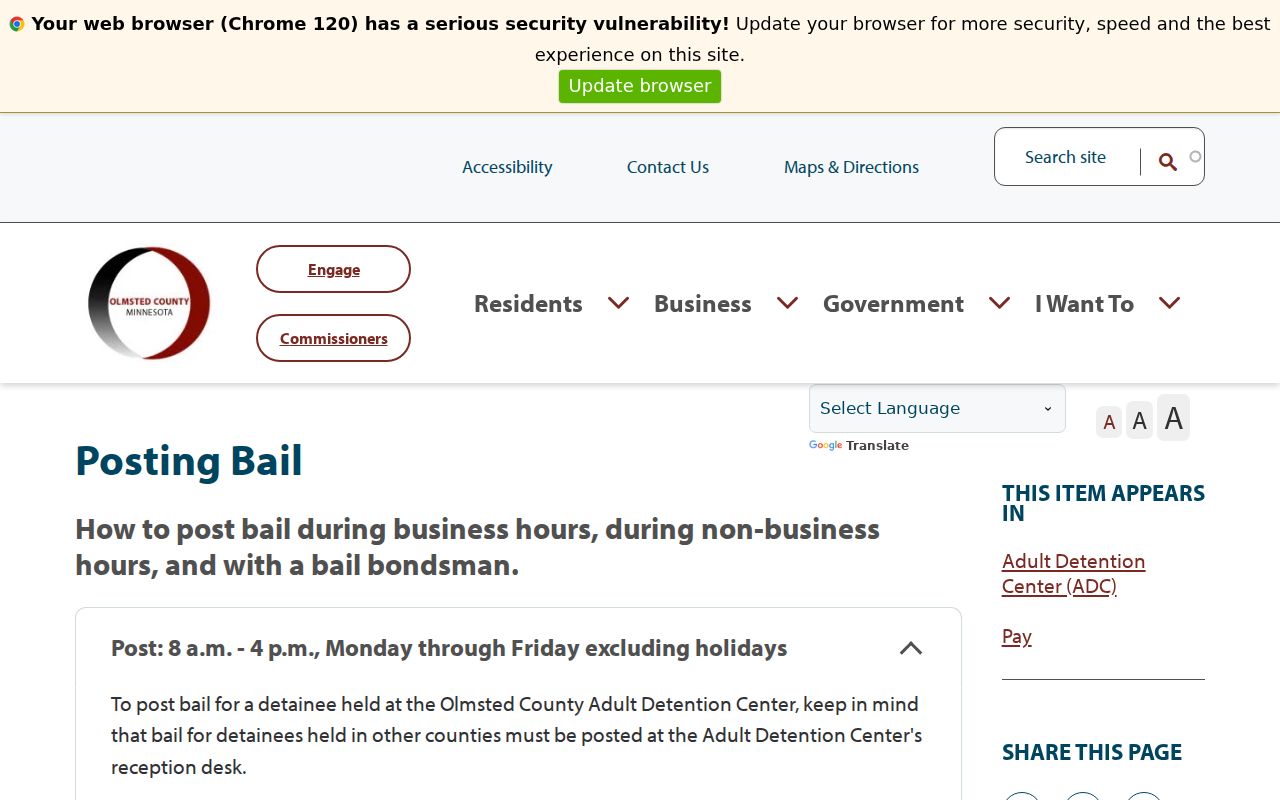
Those instructions cover payment, hours, and what a person may bring to intake at the Olmsted County jail. Note: Early arrival lowers weekend custody risk, but it guarantees neither a same-day release nor a particular judge.
If There's an Arrest Warrant for You
A warrant in Olmsted County does not expire just because nobody acts on it. Waiting means risking arrest at a bad moment. An attorney can review the case, ask the court to recall the warrant, and set up a surrender with the jail. Bail may be available depending on the order and the judge.
Important: Talk to a lawyer before you turn yourself in. Being stopped or arrested with an active warrant can add custody time, and only a judge can recall the warrant.
Ask the Olmsted County court about the next hearing date. Also ask how to request counsel if paying for a lawyer is out of reach.
Federal Arrest Warrants and Olmsted County
Extradition is part of the Olmsted County Sheriff's warrant work. The 2025 annual report logs 24 extraditions covering 7,185 miles and 235 hours, plus 195 warrant and application trips. Those figures describe transport operations and stay aggregate. Federal warrants sit on a separate shelf. The United States District Court for the District of Minnesota handles federal cases, the U.S. Marshals Service covers Olmsted County, and federal dockets can be pulled through PACER for a per-page fee. A county warrant check will not surface federal process.