
Olmsted County Bench Warrants Explained
A bench warrant is court process a judge signs when someone skips a required obligation. Minnesota recognizes a few common triggers. Failure to appear leads the list. An unpaid obligation tied to a case or a violated condition of release can do the same. Once signed, the warrant enters the same system the Olmsted County Sheriff's Office maintains, so it can show up on the county's public summary alongside the other active entries. That summary carries limits, though. Olmsted County does not label any row as a bench warrant, so a reader sees only a name, a date of birth, and a count. A phone call settles more than the list does.
Minnesota Rule 3 and Olmsted Bench Warrants
Minnesota Rule 3 sets the order of events, and it explains why Olmsted County bench warrants usually arrive late rather than early. When a complaint and its supporting documents establish probable cause, the court issues either a summons or a warrant. The rule prefers a summons unless the person is unlikely to respond, cannot be located, or an arrest is needed to prevent harm. That built-in preference means a first missed step does not always produce a warrant immediately. The state also publishes the criminal procedure forms that carry a failure-to-appear matter to a judge.
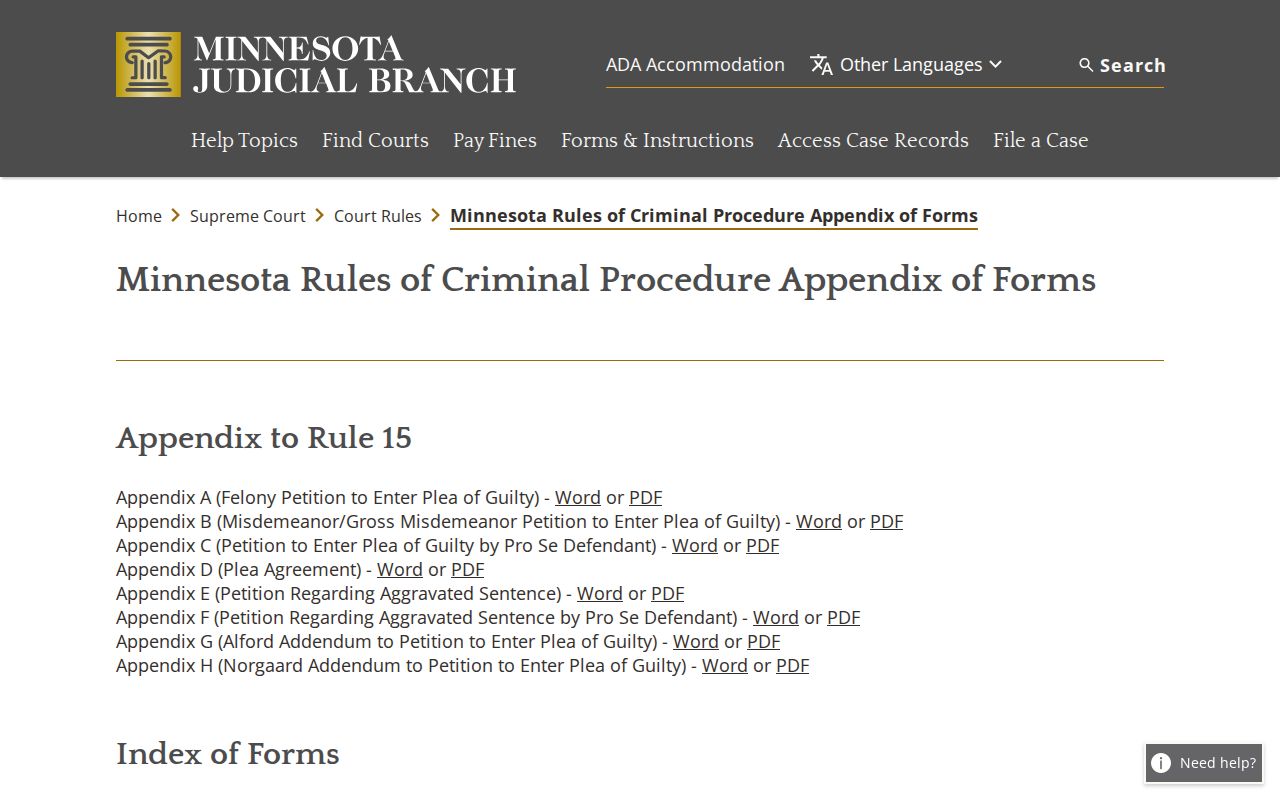
Those forms describe the court's process, not a do-it-yourself way to cancel a warrant.
How Olmsted County Bench Warrants Are Issued
Bench warrants in Olmsted County come from Olmsted County District Court. A judge signs or approves the order. The Sheriff's Office processes the data, and its Sheriff's Civil and Warrants Division serves criminal warrants alongside civil process work.
Warrant flow: Missed court date › judge issues a bench warrant › the Sheriff serves it or the person surrenders › the case returns to court.
A sign-and-release warrant can interrupt that flow in Olmsted County. So the useful question is what the specific warrant requires, not what the label suggests.
Missed Court Dates in Olmsted County
A missed date in Olmsted County is not the end of the case. What matters more is how a person responds in the first week after it.
- Check the county Active Warrants application, then confirm with the Warrant Desk at 507-328-6830.
- Call Olmsted Court Administration at 507-722-7264 and ask which judge holds the case and what the next hearing is.
- Talk to an attorney about a motion to recall the warrant or about arranging a surrender.
- If surrender is the plan, use the Adult Detention Center, which accepts voluntary surrender around the clock.
- Bring identification and permitted medication, and arrive early on a weekday to reduce weekend custody risk.
Bench Warrants and Arrest Warrants Compared
In Olmsted County, the two warrant types can look alike on a public list and behave quite differently in practice.
| Point of Comparison | Bench Warrant | Arrest Warrant |
|---|---|---|
| What triggers it | A missed court date or a violated condition | A charge supported by probable cause |
| Who signs it | District Court judge | District Court judge |
| What it asks officers to do | Bring the person before the court | Take the person into custody |
| Typical first step | A court date, a recall motion, or a surrender | Counsel, surrender, or bail |
| What the public list shows | A summary entry only | A summary entry only |
Neither label appears on the Olmsted County list, because the summary does not show warrant type at all.
Olmsted County Sign-and-Release Warrants
Minnesota began using sign-and-release warrants on January 1, 2024. Under that process, an officer serving a qualifying warrant can hand the person a new court date instead of taking them into custody. The 2025 Olmsted County Sheriff report counts 196 sign-and-release warrants in, 152 cleared by arrest, and 22 cleared another way, which shows the process is routine practice here. Note: Sign-and-release is a procedural option for qualifying warrants, not an amnesty program, and a court or officer decides whether it applies.
Resolving an Olmsted County Bench Warrant
Resolving an Olmsted County bench warrant starts with the court that issued it. A lawyer can ask for a recall, sometimes called a motion to quash. A surrender can be arranged in advance. Bail may be available depending on the warrant and the judge. Community work service and payment plans come up mainly in Rochester city traffic matters, where work service is credited at $10 an hour.
Careful: Do not ignore a bench warrant. A missed court obligation can lead to arrest, added penalties, and a state notification consequence, and the case does not close on its own.
In Olmsted County, anyone who cannot afford counsel can ask about a public defender at the first appearance.
Rochester's Tuesday Arraignment Route
Rochester handles city traffic citations and active failure-to-appear matters on a set arraignment day. The city attorney's instructions send people to the fourth floor of the Olmsted County Government Center, through Door B. Security screening happens on the second floor, and hearings begin at 2:30 p.m. If Monday is a holiday, there is no traffic court the following Tuesday. Note: Confirm the schedule before traveling, because an online calendar gap does not mean a hearing was cancelled.
Finding the Court That Issued the Warrant
The court that issued the warrant controls the Olmsted County case. The Sheriff's Office controls service and custody routing. Civil process runs on a separate line, worth knowing before you dial the wrong number.
Olmsted Court Administration
151 Fourth Street SE, Rochester, MN 55904
507-722-7264
Criminal and juvenile delinquency line: 507-722-7279
Sheriff's Warrant Desk
101 Fourth Street Southeast, Rochester, MN 55904
507-328-6830
warrants@olmstedcounty.gov
Olmsted County civil papers use 507-328-6820 and civil@olmstedcounty.gov, and the division served 3,553 civil papers in 2024.
Olmsted County Bench Warrant Myths
A bench warrant carries a lot of assumptions, and most of them are wrong.
- It is not a new charge. The warrant asks the person to appear and does not add an offense by itself.
- It is not proof of guilt. A warrant is court process tied to an unresolved obligation.
- It is not always on the public list. Refreshes lag, and parking matters never appear.
- It is not permanent. A judge can recall it, and a qualifying warrant may be served with a new date instead of custody.
Clear language matters in Olmsted County, because the term capias does not appear in Minnesota practice. Official notices say bench warrant, arrest warrant, or failure to appear.